

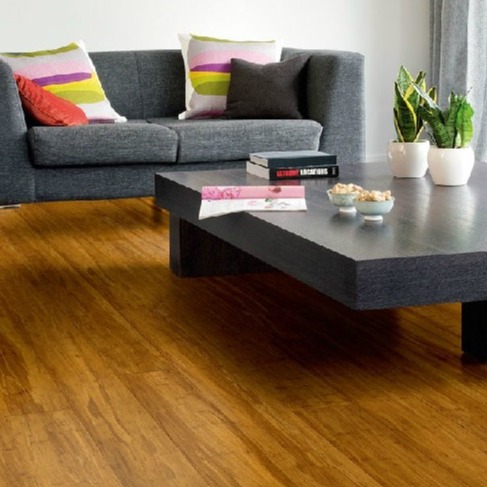

Vertical natural solid bamboo flooring offers a calm, finely detailed surface that highlights the pure, untouched beauty of bamboo. To show what makes this material appealing, it helps to start with the basics of solid bamboo flooring. Solid bamboo flooring is produced by slicing mature bamboo culms into long strips, removing the outer skin, treating the strips to eliminate starches and impurities, drying them to the correct moisture level, and laminating them under high pressure. These laminated blocks are then milled into strong, uniform planks. Because the material is solid all the way through—rather than layered like engineered flooring—it has a stable density and a sturdy, reliable feel underfoot. This structure allows it to perform consistently in everyday living environments, maintaining both strength and appearance over an extended period.
Vertical grain is one of the defining features of this product. When creating a vertical‑grained board, the bamboo strips are turned on their sides so their narrow edges face upward during lamination. As the strips align in tight rows, the surface develops a fine-lined texture that runs smoothly along the length of each plank. This gives the floor a refined, structured look with subtle variations rather than broad patterns or prominent nodes. The grain expresses itself through gentle linear markings that offer a balanced, uniform aesthetic. Many people appreciate vertical grain for its quiet elegance and its ability to complement interiors that favor simplicity and clean lines. This grain orientation also contributes to the extreme stability of the board, as the vertical arrangement of fibers helps reduce the chance of lateral expansion.
The natural color brings another meaningful dimension to the material's appeal. Natural bamboo retains the soft, light tones that come directly from the plant itself. Instead of being altered by heat or staining, the color reflects the creamy, pale golden shade that bamboo develops in its mature stage. This clarity of tone enhances the fine grain and helps brighten interior spaces. Natural bamboo flooring pairs easily with modern, traditional, Scandinavian, and coastal décor because it acts as a neutral foundation while still offering a warm, organic feel. The absence of artificial coloring also highlights the authenticity of the bamboo fibers, allowing their inherent character to stand on its own.
Vertical natural solid bamboo flooring is available in several practical and visually appealing sizes. Standard thicknesses typically range from about 10 to 15 millimeters, giving homeowners and installers flexibility depending on the subfloor and installation preferences. Widths usually fall between 96 and 130 millimeters, although custom widths can be produced for special projects. Lengths vary from short boards that create lively visual movement to long planks that stretch across a room with a smooth, uninterrupted flow. These size options allow the flooring to adapt to compact rooms, wide hallways, large living areas, and commercial spaces. With multiple dimensions available, designers can influence the spatial impression of a room—wider boards offer a broader feel, while narrower boards add rhythm and structure.
Bamboo plywood has moved from a niche material to a mainstream building and design staple, and its rise has been especially clear throughout 2026. What once seemed like an eco‑friendly alternative for a narrow segment of architects and furniture makers has become a preferred choice across construction, interiors, and product manufacturing. The shift is not happening because bamboo is trendy or novel, but because the material has reached a level of performance, consistency, and availability that makes it a practical competitor to long‑established hardwoods.
The change has been building for years, but several forces have aligned at the same time: refined processing techniques, advances in adhesive technology, supply chain maturation, and a broader reassessment of how building materials should support long‑term sustainability goals. While traditional wood species still have established markets, bamboo plywood is increasingly selected for projects where stability, predictable quality, and responsible sourcing matter as much as appearance.
Below is a close look at why bamboo plywood has moved ahead and what factors have contributed to its strong position in 2026.
Rapid Regeneration and Consistent Supply
One of bamboo’s defining characteristics is its growth rate. Certain species reach maturity in four to six years, compared with several decades for oak, maple, walnut, and other hardwoods. This rapid regeneration has removed long‑standing supply bottlenecks that often affect slow‑growing species, especially those sensitive to forestry regulations or regional climate pressure.
Producers are now able to maintain steady output year‑round due to sophisticated plantation management systems. Irrigation, soil monitoring, and controlled harvesting schedules keep supply stable without exhausting resources. For manufacturers who rely on predictable volumes, this reliability matters. It reduces the risk of price swings and makes long‑term planning easier.
Traditional wood producers still face the challenges of variable harvest seasons, forest thinning policies, and import restrictions. These factors can make certain hardwoods scarce or more expensive than anticipated. In contrast, bamboo’s short growth cycle helps buffer disruptions, offering a level of certainty that buyers increasingly value.